
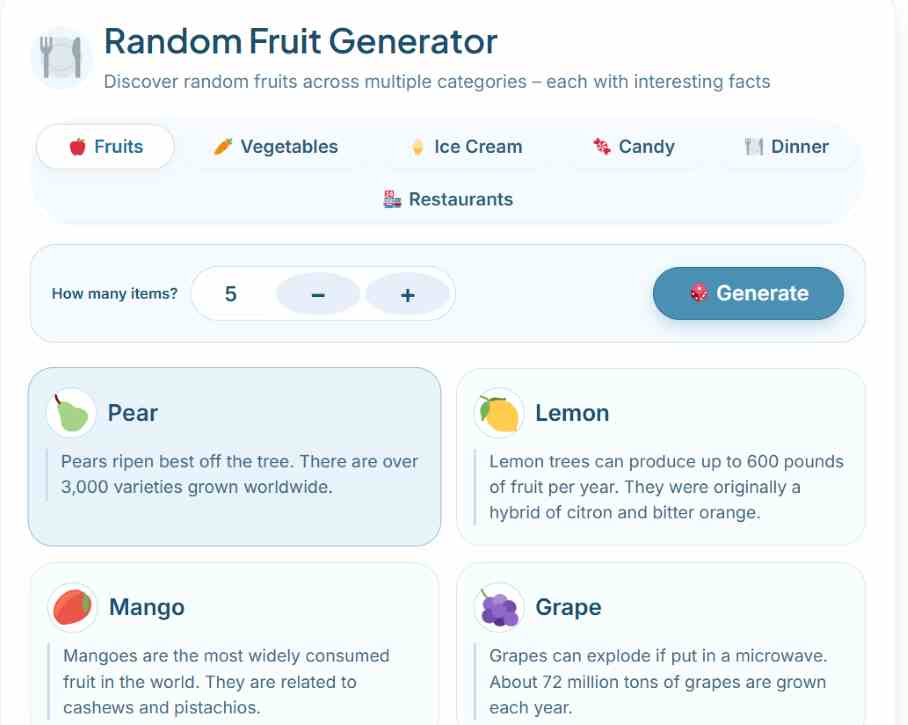
Press Generate and land on a new fruit every click — its name, image, and what it does for your body. Whether you’re planning this week’s meals, building a quiz, looking for your next smoothie ingredient, or simply curious what a rambutan tastes like, this tool delivers the answer in under a second. No login. No ads. Works on every device.
Random Fruit Generator
Discover random fruits across multiple categories – each with interesting facts
What Is a Random Fruit Generator and How Does It Work?
A random fruit generator is a browser-based tool that picks one fruit at random from a large, curated database and displays it alongside useful information — typically an image, calorie count per 100g, and a key health benefit. The result changes with every click, making it useful for learning, exploration, meal planning, games, and creative inspiration.
Unlike a static list or a Wikipedia article, a generator introduces an element of surprise that makes fruit discovery feel interactive rather than passive. That small moment of “what will I get?” is precisely what makes this type of tool memorable and repeat-worthy.
What Each Result Shows You
- Fruit Name — Common name and, where applicable, an alternative regional name
- High-Quality Image — So you instantly recognize it in a market or menu
- Calories per 100g — Useful for anyone tracking macros or managing weight
- Primary Health Benefit — The one thing this fruit is best known for nutritionally
- Fruit Type / Category — Tropical, citrus, berry, drupe, etc.
Step-by-Step: How to Use the Generator
- Click Generate — A brief animation plays while the tool selects your fruit.
- Read the result card — Take in the name, image, calories, and benefit note.
- Explore further — Click again for a completely different fruit, every time.
- Use the info — Add it to your shopping list, quiz, recipe idea, or content calendar.
The 8 Main Types of Fruits Our Generator Covers
Most people think of fruits as simply “sweet things that grow on trees.” In botanical terms, however, fruits are far more varied — and understanding the categories helps you appreciate how diverse the generator’s database really is.
Berries
Botanically speaking, berries are fleshy fruits developed from a single flower with one ovary. This includes strawberries, blueberries, raspberries, and — perhaps surprisingly — bananas, grapes, and kiwis. They are among the highest sources of antioxidants in the plant kingdom.
Drupes (Stone Fruits)
Drupes have a fleshy outer layer surrounding a hard stone (pit) that contains the seed. Mangoes, peaches, cherries, plums, apricots, and olives all fall here. Stone fruits are typically high in Vitamin C and beta-carotene.
Citrus Fruits
Lemons, oranges, grapefruits, limes, and tangerines belong to the Rutaceae family. They are recognized by their thick, aromatic rind (hesperidium) and are among the most cultivated fruits on Earth. Citrus fruits are the gold standard for Vitamin C delivery.
Tropical Fruits
Grown in equatorial climates, tropical fruits include papaya, pineapple, mango, dragon fruit, jackfruit, and durian. They tend to be high in digestive enzymes (papain in papaya, bromelain in pineapple) and exotic flavor compounds not found in temperate fruits.
Pomes
Apples, pears, and quinces are pomes — fruits with a central core of seeds surrounded by thick flesh. They are rich in pectin, a soluble fiber that supports gut health and helps lower LDL cholesterol.
Melons
Watermelon, cantaloupe, honeydew, and casaba belong to the Cucurbitaceae family. Technically vegetables botanically, they are treated as fruits culinarily. They are exceptionally high in water content (up to 92%) and are natural hydrators.
Exotic & Rare Varieties
This is where the generator gets truly interesting. Fruits like rambutan, langsat, feijoa, cherimoya, salak (snake fruit), loquat, kiwano (horned melon), and ackee represent the diverse corners of global fruit biodiversity that most people never encounter at a local supermarket.
Dried Fruits (Dehydrated)
While our generator focuses on fresh fruits, it’s worth noting that dates, figs, raisins, prunes, and apricots are nutritionally dense versions of fresh counterparts — concentrated in calories, fiber, and minerals.
Eating the Rainbow: What Fruit Colors Tell You About Nutrition
One of the smartest things our generator can do for you is expose you to fruits across the entire color spectrum — and color is not merely aesthetic. Each pigment in fruit corresponds to a distinct family of phytonutrients.
Red & Pink Fruits
Strawberries, watermelon, pomegranate, and red grapefruit get their color from lycopene and anthocyanins. Lycopene is linked to reduced risk of prostate cancer and cardiovascular protection. Anthocyanins fight oxidative stress and inflammation.
Orange & Yellow Fruits
Mangoes, papayas, oranges, and peaches owe their color to beta-carotene and flavonoids. Beta-carotene converts to Vitamin A in the body, supporting eyesight, skin integrity, and immune function.
Green Fruits
Kiwi, avocado, green apple, and honeydew contain chlorophyll, lutein, and Vitamin K. Lutein specifically supports macular health and reduces the risk of age-related vision loss.
Purple & Blue Fruits
Blueberries, blackberries, plums, and concord grapes contain some of the highest concentrations of anthocyanins of any food. Research continues to link regular consumption to improved brain function and memory retention.
Seasonal Fruit Discovery: Why Your Random Result Might Be Seasonal
Seasonality matters. Fruit eaten in its natural growing season tends to be higher in vitamins, lower in preservatives, and significantly more affordable. Using a random fruit generator can unexpectedly point you toward a fruit that happens to be in peak season right now — which means better taste and better value.
Spring Fruits (March – May)
Strawberries, cherries, lychees, apricots, and kumquats come into their prime in spring. These are high in Vitamin C and folate, ideal for post-winter immune recovery.
Summer Fruits (June – August)
Watermelon, peaches, mangoes, blueberries, nectarines, and figs dominate summer harvests globally. Hydrating and antioxidant-rich, summer fruits are the most diverse in the database.
Autumn Fruits (September – November)
Apples, pears, grapes, persimmons, pomegranates, and cranberries come into focus. These are typically high in pectin and polyphenols — excellent for gut health heading into winter.
Winter Fruits (December – February)
Citrus fruits peak in winter — oranges, grapefruits, clementines, and blood oranges. This is also peak season for kiwis and pomelos. Their Vitamin C content is nature’s answer to cold and flu season.
Fruits Matched to Specific Health Goals
Let your random result double as a health decision. Here is a quick reference for what to prioritize when the generator hands you a result that aligns with your personal goals.
For Weight Management
Fruits under 50 calories per 100g — strawberries (32 cal), watermelon (30 cal), papaya (43 cal), and cantaloupe (34 cal) — are ideal. Their high fiber and water content create satiety with minimal caloric load.
For Blood Sugar Control (Diabetes-Friendly)
Low glycemic index (GI) fruits include cherries (GI 22), grapefruit (GI 25), pears (GI 38), and apples (GI 39). Avoid high-GI options like watermelon (GI 72) and dates (GI 62) in large portions if you are managing blood glucose.
📋 Nutritional Note: Glycemic index values referenced here align with established databases from the University of Sydney’s GI Research Service (SUGiRS). Always consult a registered dietitian before making significant dietary changes based on any tool or guide, including this one.
For Athletic Performance & Recovery
Bananas (fast-releasing carbohydrates + potassium), tart cherries (reduces muscle inflammation, shown in multiple peer-reviewed studies), and watermelon (contains citrulline, which improves blood flow) are the top performers here.
For Skin Health
Vitamin C-rich fruits support collagen synthesis — strawberries, kiwi, guava, and papaya lead this category. Avocado’s healthy fats and Vitamin E contribute to skin barrier integrity.
For Gut Health & Digestion
Papaya (papain enzyme), pineapple (bromelain enzyme), kiwi (actinidin), and any high-fiber fruit like pears and apples actively support digestive health and regularity.
The Best Time to Eat Fruit (And Why It Actually Matters)
Timing fruit intake is a topic that nutrition research has nuanced — and that no competitor addresses properly. Here is a grounded, practical breakdown.
Morning — Yes, the Best Default
Eating fruit in the morning takes advantage of your digestive system at its most efficient. Fructose is processed by the liver, which has been fasting overnight and has maximal glycogen storage capacity available. Light, water-rich fruits like watermelon, berries, and citrus are ideal breakfast starters.
Pre-Workout (30–60 Minutes Before)
Bananas, dates, and grapes provide fast-releasing natural sugars (glucose and fructose) that prime your muscles and liver for physical exertion without causing gastrointestinal discomfort.
Post-Workout
Tart cherries or pineapple post-exercise can reduce delayed onset muscle soreness (DOMS). Combine with a protein source to optimize muscle repair.
Evening — Not Off-Limits
Contrary to popular belief, eating fruit at night does not automatically convert to fat. However, high-sugar fruits like mangoes and bananas are better consumed earlier. Kiwi before bed has been studied for its mild serotonin-boosting effects, which may support better sleep onset.
Who Uses This Tool and For What (Real Use Cases)
The random fruit generator has a surprisingly wide audience. Here is an honest, practical breakdown of how different people actually use it.
Students & Self-Learners
Biology students, nutrition trainees, and curious learners use the generator to encounter fruits outside their local market experience. Each result functions as a flashcard: see the image, read the benefit, retain the name. It works because the unpredictability of “what comes next” keeps the brain engaged.
Teachers & Educators — 5 Ready Classroom Activities
- Guess the Calories Game — Generate a fruit, ask students to guess the calorie count before revealing. The team closest wins.
- Draw & Identify — Show the result card for 5 seconds, then hide it. Students draw from memory. Great for younger children learning fruit names.
- Nutrition Report Starter — Each student clicks once and writes a short report on their assigned fruit’s origin, taste, and health benefits.
- Fruit Classification Quiz — After generating 10 fruits, students sort them into the correct botanical category (berry, drupe, citrus, etc.).
- Global Geography Link — Pair each generated fruit with the primary country of cultivation on a world map activity sheet.
Content Creators (TikTok, Instagram, YouTube Shorts)
The “Fruit of the Day” content format is proven and repeatable. Creators use the generator to pick their subject without bias, generate curiosity with the “random” angle, and deliver nutritional education in 30–60 second clips. The visual nature of fruit content performs well across all short-form platforms.
Home Cooks, Chefs & Food Bloggers
Using the generator as a “mystery ingredient” for recipe challenges mimics the appeal of cooking competition shows. One random result — say, persimmon — can become the centerpiece of an entire recipe post, driving original content from a simple click.
Parents with Young Children
Screen time with purpose: use the generator as an interactive fruit introduction tool during mealtimes. Kids are more likely to try a fruit they have “discovered” themselves. The images make it easier for pre-readers to engage independently.
Fitness Coaches & Nutritionists
Recommend this tool to clients as a daily habit for diversifying fruit intake. A five-year dietary pattern study in the Harvard School of Public Health found that variety in fruit consumption — not just quantity — was a strong predictor of diet quality scores. This tool supports that variety mechanically.
Developers & Game Designers
Need a random fruit for a placeholder in your food app? A fruit character for a mobile game? A vocabulary set for a language-learning application? The generator provides an immediate, visual starting point without manual list-building.
10 Fascinating Fruit Facts That Will Change How You See the Generator
Sometimes a random result is more interesting than it looks. Here are facts worth knowing when the generator surfaces a surprising fruit.
- Strawberries are the only fruit with seeds on the outside — and botanically, they are not berries at all. Bananas are.
- A pineapple takes up to 24 months to fully mature from planting to harvest.
- The durian — often generated as an “exotic” result — is banned on public transport in Singapore due to its powerful odor.
- Avocados are classified as a fruit (specifically a large berry) and are native to Mexico and Central America, though they now grow across 60+ countries.
- Jackfruit is the largest tree fruit in the world, capable of reaching 55 kg (120 lbs) in a single specimen.
- The kiwano (horned melon) — from southern Africa — tastes like a combination of cucumber, banana, and lemon simultaneously.
- Mangoes account for approximately 50% of all tropical fruit produced worldwide.
- The color of a tomato, which is botanically a fruit, is determined by lycopene — the same compound that makes watermelon pink.
- Dragon fruit (pitaya) is a cactus fruit — one of the few fruits to grow on cacti.
- Figs are not technically a fruit but an inverted flower — what you eat is a syconium, a hollow receptacle containing hundreds of tiny flowers.
How to Use the Generator for a Weekly Fruit Rotation Plan
Here is a practical, structured method to use the random fruit generator as part of a real dietary habit — something no competitor currently offers.
The 5-Day Fruit Rotation Method
- Monday — Click Generate. Note the fruit. Add it to your grocery list for the week.
- Tuesday — Click again. If it repeats, click once more. You now have two fruits.
- Wednesday through Friday — Continue until you have 5 distinct fruits for the week.
- Saturday — Shop. Buy one of each. Try them raw, in a salad, blended, or cooked.
- Sunday — Reflect: which one was new to you? Which will you buy again? Reset for next week.
This method operationalizes dietary variety without the decision fatigue of choosing fruits from memory. The randomness is the point — it bypasses the cognitive bias toward familiarity that keeps most people stuck in the apple-banana loop.
Combine the Generator With a Food Journal
Screenshot each result. Keep a simple log of every fruit you have tried from the generator. After 30 days, most users find they have eaten 15–20 fruits they had never consciously chosen before — a measurable, genuine expansion of dietary diversity.
Frequently Asked Questions
What is a Random Fruits Generator?
It is a free online tool that picks a fruit at random from a large database and displays it with an image, calorie count, and primary health benefit. Click Generate as many times as you like — each result is independently selected.
How many fruits are in the database?
The database includes a broad range of common, tropical, citrus, exotic, and regional fruits — spanning well over 100 varieties from every major fruit-growing region on Earth, including many that are rarely seen in Western supermarkets.
Can the same fruit appear twice in a row?
The tool is designed to avoid immediate repetition. With a large pool of fruits in rotation, the likelihood of getting the same result twice consecutively is very low, though not mathematically impossible.
Is this tool free to use?
Yes, completely free. No account required, no usage limits, no paywalled results. The tool runs entirely in your browser.
Is it safe for people with diabetes to use for diet planning?
The tool is informational and can help identify low-GI fruits (such as cherries, pears, and grapefruit) which are generally better suited for blood sugar management. However, anyone managing diabetes should consult a registered dietitian or healthcare professional before making dietary changes.
Can I use it on my phone?
Yes. The tool is fully mobile-responsive and works on all screen sizes across iOS and Android devices, as well as all major browsers.
Does the tool include exotic and rare fruits?
Yes — one of its strongest features is the inclusion of less common varieties: rambutan, kiwano, feijoa, langsat, salak, cherimoya, and dozens more. This is exactly where the generator becomes educational rather than merely convenient.
Can teachers use this in the classroom?
Absolutely. The tool requires no login, works on school devices, and generates a fresh educational result with each click. It works well for vocabulary exercises, nutrition lessons, biology classification tasks, geography projects, and group quiz games.
What is the best time to eat fruit according to nutrition science?
Most nutrition researchers agree that morning is the optimal default, as the digestive system is most active and liver glycogen is depleted after overnight fasting. Pre-workout fruit consumption (30–60 minutes before exercise) is also well-supported. Evening fruit consumption is not harmful, though heavy, high-sugar fruits are better suited to earlier in the day.
How is this different from just Googling a fruit?
A Google search requires you to already know what fruit you’re looking for. This generator removes that requirement. The randomness is the core value — it introduces you to fruits you would never think to search for, expanding your dietary and nutritional awareness passively and enjoyably.
More Random Generators you can try:
- Random Animal Generator – discover a random animal each time.
- Random Object Generator – get random objects instantly.
- Random Color Generator – pick colors randomly for fun or design.
- Random Country Generator – explore random countries with a click.