
Key Takeaways
- Invoice factoring means selling an unpaid invoice to a factoring company for immediate cash, typically 80-90% upfront, with the remaining balance paid once your client settles the invoice minus fees.
- Factoring fees usually range from 1% to 5% of the invoice value per month it remains unpaid, meaning a slow-paying client can quietly cost you far more than the sticker rate suggests.
- Invoice factoring makes sense when a cash flow gap threatens payroll or a time-sensitive expense — it’s a poor fit for occasional freelance work with only one or two invoices out at a time.
- This guide covers real factoring rates, a worked cost example, and the difference between factoring and invoice discounting, so you know exactly what you’re agreeing to before signing anything.
A small marketing agency owner named Priya has $18,000 sitting in unpaid client invoices — real, confirmed work, just not paid yet — and payroll is due in six days. Her clients are good for the money, they’re just on Net 60 terms, and six days isn’t enough time to wait it out. This is exactly the situation invoice factoring exists for, and by the end of this guide, you’ll know what invoice factoring actually costs, how the fee structure works in practice, and whether it’s the right move for a cash flow gap like Priya’s — or whether it’s going to cost you more than it’s worth.
What Is Invoice Factoring?
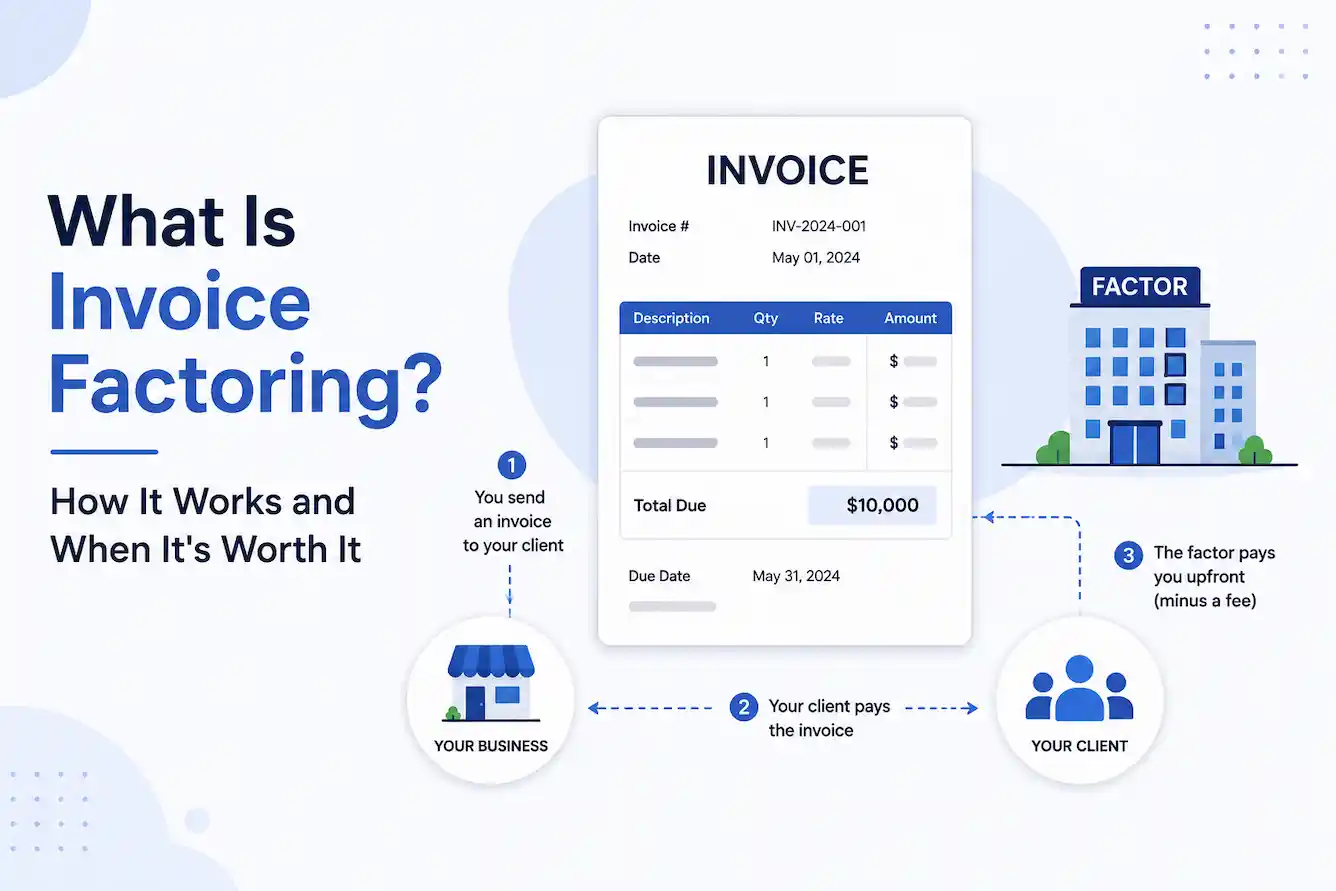
Invoice factoring is a financing arrangement where you sell your unpaid invoices to a factoring company in exchange for immediate cash, usually 80-90% of the invoice value upfront, with the remaining balance paid to you once your client settles the invoice, minus the factoring company’s fee.
How It’s Different From a Loan
Factoring isn’t debt in the traditional sense — you’re not borrowing money and paying it back with interest, you’re selling an asset (the invoice) at a discount for immediate liquidity. The factoring company takes on the job of collecting payment from your client directly, which means your client will know a third party is involved, since payment now goes to the factoring company instead of you. This is the detail that surprises most freelancers and small business owners the first time they look into it — factoring isn’t a quiet background arrangement, it changes who your client sends payment to.
How Invoice Factoring Actually Works
The process runs in four steps: you submit an unpaid invoice to a factoring company, they advance you 80-90% of its value within 24-48 hours, your client pays the factoring company directly per the original invoice terms, and once paid, the factoring company sends you the remaining balance minus their fee.
| Step | What Happens | Typical Timeframe |
|---|---|---|
| 1. Submit invoice | You send the unpaid invoice to the factoring company | Same day |
| 2. Receive advance | 80-90% of invoice value deposited to you | 24-48 hours |
| 3. Client pays factor | Your client pays the factoring company directly | Per original terms (Net 30, Net 60, etc.) |
| 4. Final payment | Factoring company sends remaining balance minus fee | After client payment clears |
A Worked Example
Say Priya factors a $10,000 invoice with a 3% monthly factoring fee, and her client pays in 30 days. She receives $8,500 (85%) upfront. Once the client pays the full $10,000 to the factoring company 30 days later, the company deducts their 3% fee ($300) and sends Priya the remaining $1,200. Total received: $9,700 — meaning the $300 fee is the real cost of getting $8,500 in cash 30 days earlier than she otherwise would have.
What Does Invoice Factoring Cost?
Invoice factoring rates typically run 1% to 5% of the invoice value per month the invoice remains unpaid, with the exact rate depending on your client’s creditworthiness, your industry, and how quickly you need the funds.
Why the Rate Isn’t the Whole Story
The invoice factoring fee usually compounds the longer a client takes to pay, which most business owners don’t realize until they’ve factored a slow-paying client’s invoice. A 3% monthly rate on a Net 30 invoice costs you 3% total. That same rate on an invoice a client takes 90 days to actually settle costs you closer to 9%, since many factoring agreements charge the rate per 30-day period the invoice stays outstanding, not as a flat one-time fee. This is exactly why factoring a chronically slow-paying client’s invoices can quietly erode far more of your revenue than the advertised rate suggests — always confirm whether the fee is flat or compounds monthly before signing.
Invoice Factoring vs. Invoice Discounting
Invoice factoring and invoice discounting both give you early access to cash tied up in unpaid invoices, but the key difference is who controls collection — a factoring company collects payment directly from your client, while invoice discounting lets you keep collecting payments yourself, with the arrangement staying invisible to your client.
Which One Fits Your Situation
Factoring makes more sense for smaller businesses or freelancers who don’t have a dedicated accounts receivable process, since the factoring company handles collection for you. Invoice discounting suits larger, more established businesses that want to keep client relationships fully in-house and don’t want a third party’s name showing up in their client’s payment process. Discounting typically requires a stronger credit history and higher invoice volume to qualify, which is why it’s less commonly available to individual freelancers or very small agencies.
When Invoice Factoring Is Actually Worth It
Invoice factoring is worth it when a specific, time-sensitive cash need — payroll, a critical expense, an opportunity with a deadline — outweighs the cost of the factoring fee, and when you have consistent, creditworthy clients whose invoices a factoring company will actually accept.
When It’s the Wrong Move
Factoring a single occasional invoice from freelance work, the way a solo designer or consultant might, rarely makes financial sense — the fees eat disproportionately into smaller invoice amounts, and most factoring companies focus on B2B accounts receivable at meaningful volume, not one-off freelance invoices. If your actual problem is clients paying slowly rather than a genuine short-term cash crunch, tightening your payment terms (moving from Net 60 to Net 30, or requiring a deposit upfront) solves the root cause without paying a recurring fee to a third party. Factoring treats a symptom — no cash on hand right now — not the underlying issue of clients taking too long to pay in the first place.
Frequently Asked Questions
What is invoice factoring?
Invoice factoring is selling an unpaid invoice to a factoring company for immediate cash, typically 80-90% of the invoice value upfront, with the remainder paid once your client settles the invoice minus a fee.
How much does invoice factoring cost?
Invoice factoring rates typically range from 1% to 5% of the invoice value per month it remains unpaid, and many agreements charge this rate on a compounding monthly basis rather than as a flat one-time fee.
What’s a real invoice factoring example?
On a $10,000 invoice with a 3% monthly fee paid in 30 days, you’d receive an $8,500 advance upfront and a final $1,200 payment after the client pays, totaling $9,700 — a $300 cost for getting most of the cash 30 days early.
What’s the difference between invoice factoring and invoice discounting?
Factoring has the factoring company collect payment directly from your client, while invoice discounting lets you continue collecting payments yourself, keeping the arrangement invisible to your client.
Will my client know I’m using invoice factoring?
Yes, with traditional factoring — since payment now goes to the factoring company instead of you, your client will be aware a third party is involved in the transaction.
Is invoice factoring the same as a business loan?
No — factoring is the sale of an asset (your invoice) at a discount for immediate cash, not a loan you repay with interest, which is why it doesn’t typically show up as debt on your balance sheet the way a loan does.
Does invoice factoring hurt my credit score?
No, since you’re not borrowing money — factoring companies evaluate your client’s creditworthiness, not yours, because they’re the ones ultimately expected to pay.
When should I avoid invoice factoring?
Avoid it for occasional single invoices from freelance work, since fees disproportionately eat into smaller amounts — tightening your payment terms usually solves a slow-payment problem more cheaply than factoring does.
If cash flow gaps are a recurring problem rather than a one-time crunch, tightening your payment terms — moving to Net 15 or requiring a deposit upfront — usually fixes the root cause cheaper than factoring fees ever will. Build invoices with clear, enforceable terms using our Free Invoice Generator, or read our guide on how to invoice as a freelancer for the full breakdown on setting terms that reduce how often you need financing like this in the first place.
Written by Muhammad Hashir — Founder, NextGen Calculators. Last Updated: July 2026.