
Key Takeaways
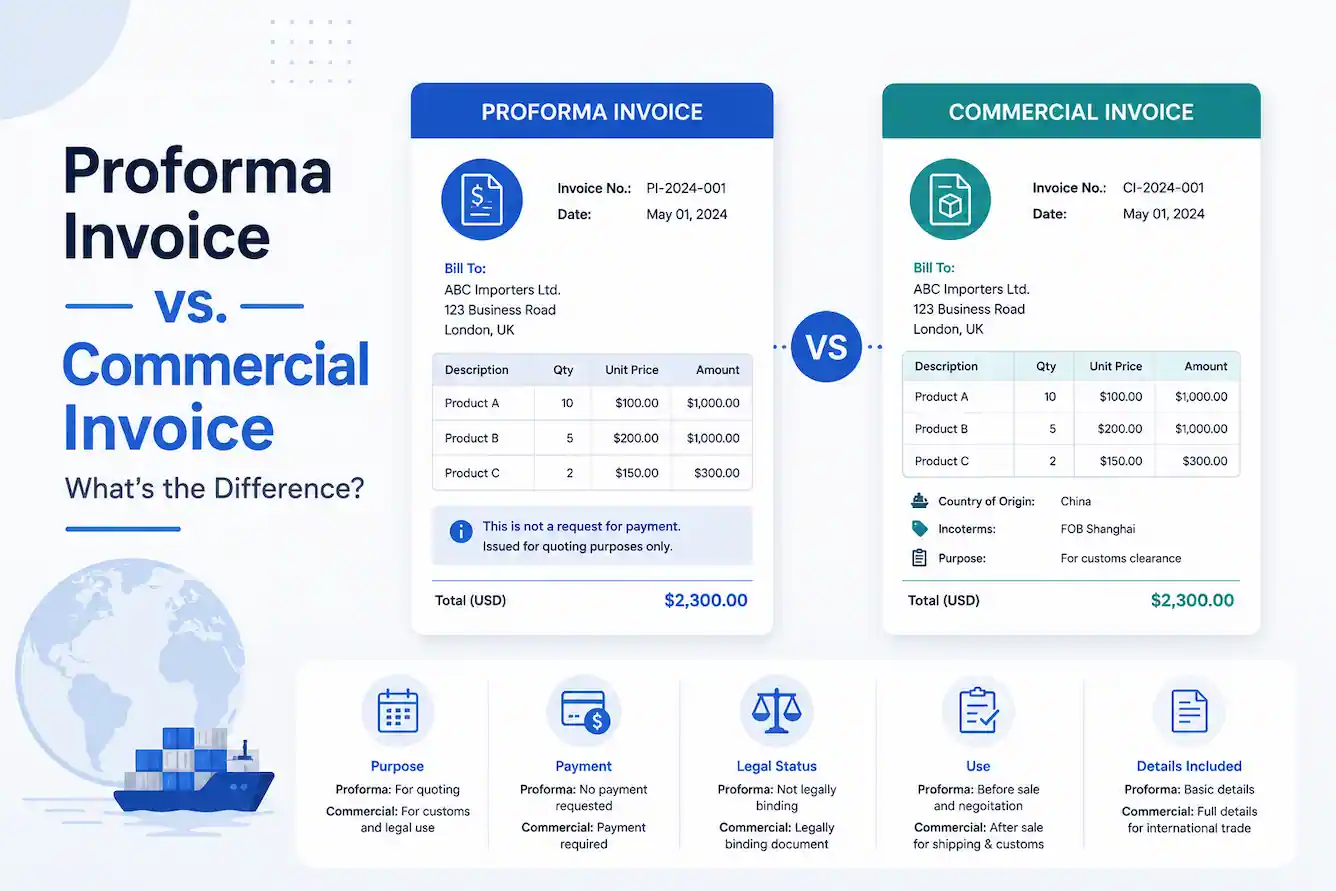
- A proforma invoice is a preliminary estimate sent before a sale is finalized, while a commercial invoice is the final legal document used to complete an international sale and clear customs.
- Customs authorities require a commercial invoice to release shipped goods — a proforma invoice alone will hold a shipment at the border, since it’s not treated as a binding sale document.
- The two documents can look nearly identical in layout, which is exactly why mislabeling one as the other is one of the most common export paperwork mistakes small businesses make.
- This guide includes a side-by-side example of both documents so you can see the actual differences, not just the definitions.
A small business owner named Daniel ships custom furniture parts to a buyer in Canada for the first time. He sends what he calls his “invoice” — the same document he uses for domestic sales — and the shipment gets held at the border for three days because customs needs a commercial invoice, not the preliminary cost estimate he actually sent. Daniel isn’t alone in this mistake; the confusion between a proforma invoice and a commercial invoice trips up small businesses shipping internationally for the first time constantly. By the end of this guide, you’ll know exactly what separates a proforma invoice from a commercial invoice, when to use each one, and how both differ from a plain quotation.
What Is a Proforma Invoice?
A proforma invoice is a preliminary document sent before a sale is finalized, showing estimated costs, quantities, and terms for goods or services that haven’t shipped or been completed yet. It’s not a demand for payment and doesn’t create a binding financial obligation — it’s a heads-up on expected costs.
When a Proforma Invoice Actually Gets Used
Exporters use proforma invoices to give an international buyer clarity on expected costs — including shipping, duties, and packaging — before finalizing the order, which lets the buyer arrange financing, import permits, or letters of credit in advance. Freelancers occasionally use a proforma invoice in place of a formal quote when a client specifically requests something that looks more official than a basic estimate. The key thing a proforma invoice is missing compared to a real invoice: it has no invoice number in the traditional accounting sense, since it never enters your actual accounts receivable — it’s a preview, not a transaction record.
What Is a Commercial Invoice?
A commercial invoice is the final, legally binding document issued once a sale is complete, and it’s the specific document customs authorities require to calculate duties and release goods across an international border.
Why Customs Specifically Requires It
A commercial invoice includes exact final quantities, agreed prices, the harmonized system (HS) code for the goods, country of origin, and the terms of sale (like FOB or CIF) — details customs agencies use to assess import duties and taxes. This is the document that actually enters your accounting records as a real, unique invoice number tied to a completed transaction, unlike a proforma invoice. Without a proper commercial invoice, customs will hold a shipment indefinitely, since they have no legally valid basis to calculate what duties are owed — this is precisely what happened to Daniel’s furniture shipment.
Proforma vs. Commercial Invoice: Side-by-Side Comparison
| Feature | Proforma Invoice | Commercial Invoice |
|---|---|---|
| Purpose | Preliminary cost estimate | Final legal sale document |
| Payment obligation | None — not binding | Yes — payment is due |
| Invoice number | Not a true accounting invoice number | Unique, tracked invoice number |
| Used for customs clearance | No | Yes, required |
| Sent before or after shipment | Before | At or after shipment |
| Can quantities/prices change | Yes, still estimates | No, finalized |
The Detail That Actually Matters Most
The single biggest practical difference isn’t the layout — it’s that customs authorities will not clear goods on a proforma invoice alone. If you’re shipping internationally for the first time, confirm you’re sending a commercial invoice with the shipment itself, and reserve the proforma invoice for the earlier stage when the buyer is still confirming costs and arranging their own import paperwork.
Proforma Invoice vs. a Quotation
A proforma invoice and a quotation both estimate costs before a sale is finalized, but a proforma invoice is formatted and treated like a real invoice, while a quotation is typically a simpler, less formal cost breakdown used earlier in a sales conversation.
Why Businesses Use One Over the Other
A quotation usually comes first, in response to an initial client inquiry, and often includes more flexibility for negotiation on price or scope. A proforma invoice tends to follow once terms are largely agreed upon, giving the buyer something closer to a final invoice format they can use for internal approval, import documentation, or arranging payment in advance. For US freelancers, this distinction rarely matters for domestic clients — a simple quote covers most needs. For businesses shipping internationally or working with buyers who need formal paperwork to secure financing or customs pre-clearance, a proforma invoice is the more appropriate document.
Common Mistakes When Using Proforma or Commercial Invoices
The most common mistake is sending a proforma invoice as if it were the final commercial invoice, which either delays payment (if a client’s finance team correctly refuses to treat an estimate as a payment demand) or delays a shipment at customs (if it’s an international order).
The Labeling Fix That Prevents Most Problems
Always label the document clearly at the top — “Proforma Invoice” for the preliminary estimate, “Commercial Invoice” for the final shipping and customs document, “Invoice” for a standard domestic sale. This single labeling habit prevents the vast majority of confusion, since a client’s accounts payable system or a customs agent often processes documents based on that exact header text rather than reading the full document to determine its purpose. For UK and EU-based exporters, commercial invoices must also show the VAT treatment applied (often zero-rated for exports outside the EU), which is a detail a proforma invoice sent earlier in the process wouldn’t need to include yet, since final tax treatment isn’t locked in until the sale completes.
Frequently Asked Questions
What is a proforma invoice?
A proforma invoice is a preliminary document showing estimated costs and terms for a sale that hasn’t been finalized yet — it’s not a payment demand and doesn’t create a binding financial obligation.
What is a pro forma invoice used for?
It’s used to give a buyer clarity on expected costs before a sale finalizes, commonly in international trade so the buyer can arrange financing, customs documentation, or import permits in advance.
What’s the difference between a proforma invoice and a commercial invoice?
A proforma invoice is a non-binding preliminary estimate, while a commercial invoice is the final, legally binding document required by customs to clear an international shipment and calculate duties.
Is a proforma invoice the same as a regular invoice?
No — a regular invoice documents a completed sale and creates a payment obligation, while a proforma invoice is sent beforehand as an estimate with no such obligation attached.
Can I use a proforma invoice to clear customs?
No, customs authorities require a commercial invoice to release goods, since a proforma invoice isn’t treated as a final, legally binding sale document.
What’s the difference between a proforma invoice and a quotation?
A proforma invoice is formatted like a formal invoice and often used for customs or financing purposes, while a quotation is typically a simpler, less formal cost estimate used earlier in a sales conversation.
Can I send a proforma invoice for a gift shipment?
Yes, a proforma invoice is commonly used for gift or no-charge shipments to declare value for customs purposes, even though no actual payment changes hands.
Does a commercial invoice need a VAT number for EU exports?
Yes, for UK and EU exporters, a commercial invoice needs to show the VAT treatment applied, which for most exports outside the EU is zero-rated, though the specific requirement depends on the destination country.
If you’re shipping internationally for the first time, confirm you’re sending a properly labeled commercial invoice with the shipment itself, not a proforma invoice — that single check prevents the exact customs delay Daniel ran into. Build both document types correctly using our Free Invoice Generator, or read our full breakdown of tax invoice format requirements for US, UK, and EU compliance basics.
Written by Muhammad Hashir — Founder, NextGen Calculators. Last Updated: July 2026.